

Growth factors help pores look tighter by supporting collagen around each hair follicle. Pores have no muscles, so they cannot physically open or close.
Stubborn texture and creasing foundation can point to more than surface oil. If you need a facial for dehydrated skin with clogged pores, the underlying issue is often a loss of support in the deeper skin.
At our private studio in Los Angeles, California, we address the loss of elasticity behind enlarged pores. As that support weakens, the walls around each follicle sag outward and collect debris.
Many clients expect harsh astringents and scrubs to get rid of wide pores. Too much exfoliation strips the skin's protective fats and triggers more oil production. It also worsens wrinkles around the mouth and eyes, along with uneven tone. Topical growth factors, proteins that send signals to skin cells, help rebuild that lost support from within.
What's Inside This Guide
- Why Do Pores Enlarge When Skin Loses Dermal Elasticity?
- How Growth Factor Infusion Tightens Loose Follicle Walls Step-by-Step
- Growth Factors vs Acid Peels vs Retinoids: Which Approach Refines Texture Best?
- What Does a Professional Targeted Facial Session Cost and How Long Does It Take?
- Which Harsh Pore-Clearing Mistakes Damage Your Protective Moisture Barrier?
- Who Is the Ideal Candidate for Pore-Refining Cellular Therapy in Southern California?
- Plan Your Personalized Skin Session at Our Studio
Why Do Pores Enlarge When Skin Loses Dermal Elasticity?
Collagen and elastin give the skin around a follicle its strength and stretch. Without enough of these fibers, the opening loosens. Research on facial pores links visible pores directly to reduced elasticity and sun-related aging, rather than oil production alone. UV light damages the deeper skin and weakens the support around each opening.
That loss of support rarely appears on its own. Deep lines beside the mouth and nose often develop alongside indented acne scars across the cheeks. Clients looking for a facial tailored to their skin may have both clogged pores and deep dehydration, even if their skin looks oily.
Makeup settles into these widened openings as the surrounding skin softens. It draws attention to uneven texture and can make pores look twice their actual size.
How Growth Factor Infusion Tightens Loose Follicle Walls Step-by-Step
Growth factors signal fibroblasts, the cells that build connective tissue, to make fresh type I collagen. This collagen presses against the follicle wall from within. At our studio, we pair skin preparation with biological proteins to speed this repair without unnecessary inflammation. During a professional treatment, we apply those proteins through the following steps:
Video: Chris Gibson explains three steps for reducing the appearance of enlarged pores.
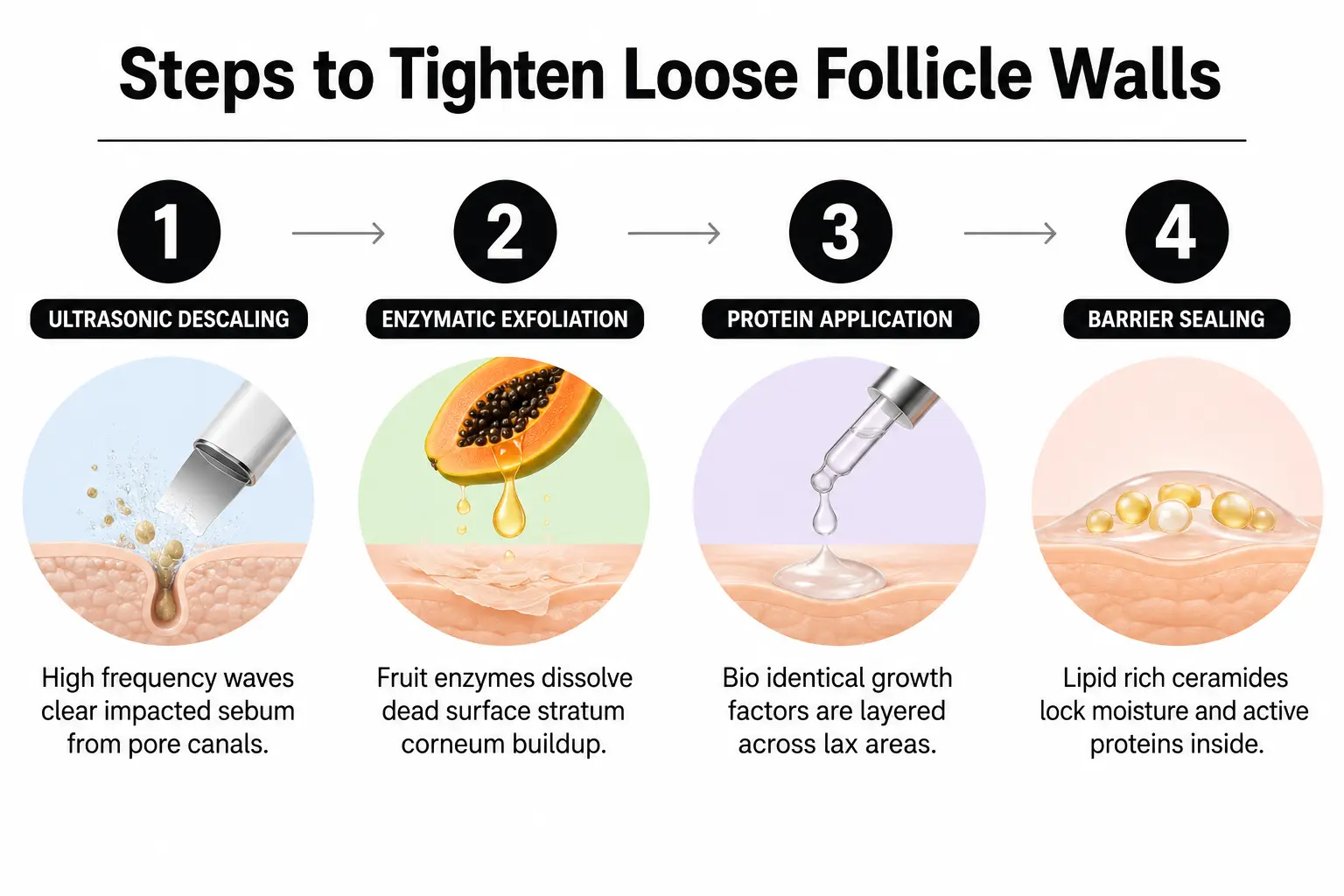
- Gentle ultrasonic cleansing: High-frequency sound waves loosen trapped oil and hardened plugs of skin protein without stretching or bruising the delicate edges of pores.
- Fruit enzyme preparation: A gentle enzyme dissolves dead surface cells so the stratum corneum, the skin's outer layer, does not block absorption of active ingredients.
- Targeted protein application: We smooth serums with signaling proteins that match those found in the body over loose skin, including areas with visible pores and fine lines.
- Support for deeper skin: Light massage and non-invasive infusion through the skin carry peptides, small protein fragments, into the deeper layer where collagen rebuilds.
- Moisture barrier finish: Ceramides, fats found naturally in the skin barrier, seal in moisture and reduce water loss through the skin while helping it settle.
Our microchanneling treatments interest many clients concerned about aging. A non-invasive customized facial, though, is often the safest starting point for a weakened moisture barrier. For more about these approaches, read our guide to skin treatments replacing invasive surgery.
Growth Factors vs Acid Peels vs Retinoids: Which Approach Refines Texture Best?
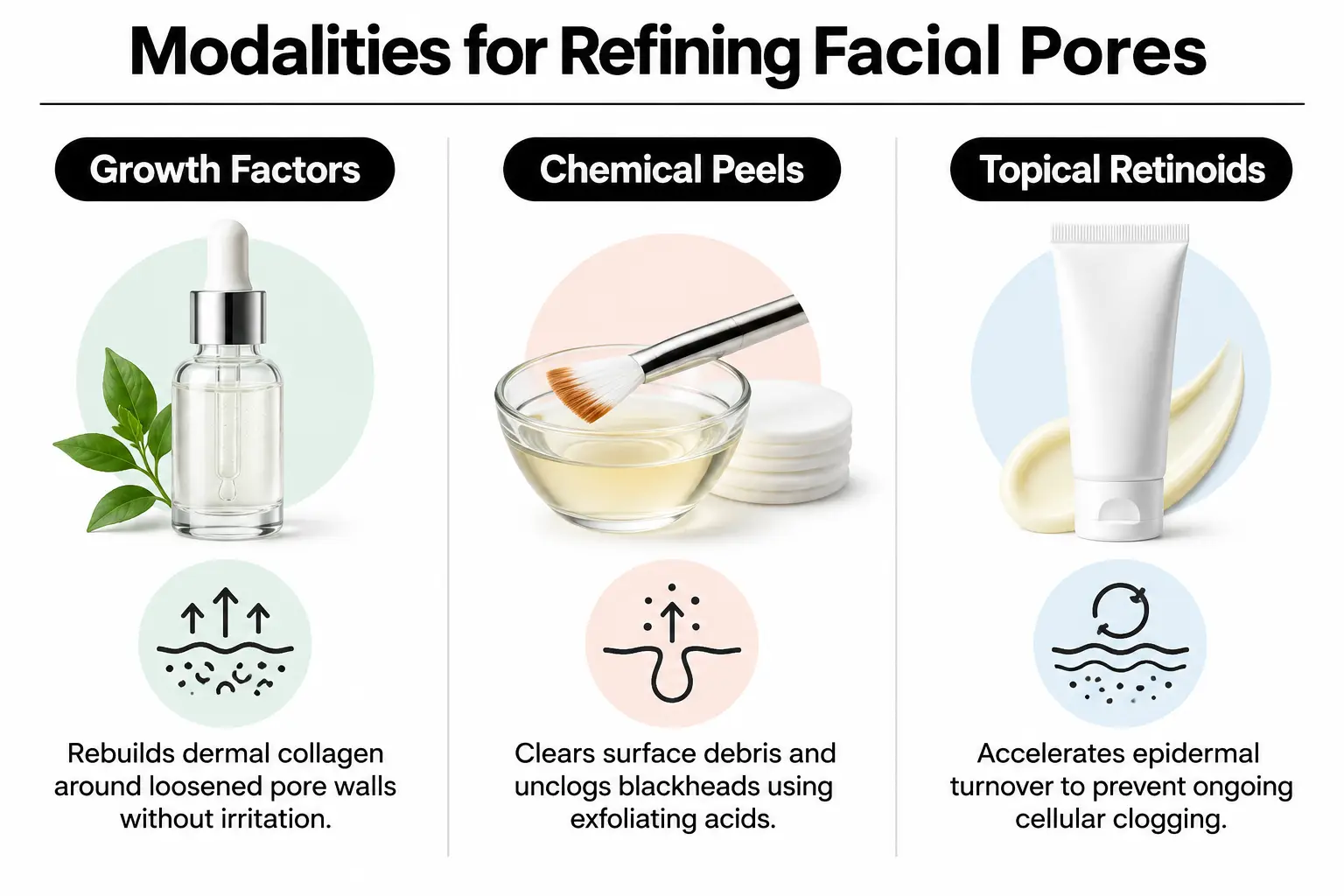
For pores enlarged by aging and loose skin, growth factors work better than acids that mainly remove dead surface cells. Choosing a treatment that fits your skin helps avoid prolonged redness and broken capillaries. It also protects against ongoing damage to the moisture barrier.
| Pore treatment | Best suited for | Watch out for |
|---|---|---|
| Topical growth factor serums | Pores enlarged by aging and loose skin, including fine expression lines | Needs regular sessions. Does not clear active cystic infections. |
| Beta-hydroxy acid peels | Oily, clogged pores and blackheads, including surface acne | Can dry and peel the skin, leaving it more sensitive to sunlight. |
| Prescription retinoids | Faster skin cell renewal and stubborn clogged pores | May cause flaking and initial breakouts, with irritation around the mouth and eyes. |
Crepey texture and loose pores can make skin look older before its time. This leads many clients to explore non-surgical facelift options for women over 50. Pairing growth factors with deeply hydrating plant ingredients supports the skin without the heavy peeling associated with strong clinical acids.
What Does a Professional Targeted Facial Session Cost and How Long Does It Take?
A professional customized facial typically takes about 60 to 75 minutes, from the first skin assessment to the final sunscreen application. For the current price of our Customize Facial at our studio, ask us for a quote before booking.
During your appointment, we examine your skin's protective barrier under magnification before removing trapped debris. Active serums then support collagen production. As you consider the cost of a customized facial, keep ongoing care in mind. Regular maintenance builds improvements in firmness over several months rather than relying on one visit.
Unlike a rushed chain spa appointment, our session follows what your skin needs that day.
Our esthetician's rule: Collagen takes time to rebuild around pore walls. Expect noticeable tightening after three to four consistent monthly renewal cycles.
Which Harsh Pore-Clearing Mistakes Damage Your Protective Moisture Barrier?
Mechanical suction tools and pore strips can permanently stretch fragile follicle walls and cause broken surface capillaries, called telangiectasia. Damage to the moisture barrier lets water escape quickly through the skin. This process, known as transepidermal water loss, leaves skin feeling dry even while it produces excess oil.
Layering strong exfoliating acids over alcohol-based toners causes another common problem. That routine damages the acid mantle, the skin's slightly acidic protective surface. Growth factors cannot function properly under those conditions because healthy protein production needs a balanced pH, the measure of acidity.
Overusing active skincare ingredients can leave your barrier weak. Our guide to tightening crepey neck skin without surgery explains restorative care. You can also read about mesotherapy injections for dull skin to understand how treatments that replenish the skin help stressed tissue recover.
Who Is the Ideal Candidate for Pore-Refining Cellular Therapy in Southern California?
People whose pores have enlarged with age or long-term sun exposure are good candidates, as are those whose dehydrated skin leaves makeup patchy. Here in Los Angeles, California, frequent UV exposure and dry urban air put stress on the skin. Both speed up thinning and make deep lines around the mouth and eyes more visible.
For persistent indented scars, read about Procell microchanneling for acne scars, or explore how microchanneling treats deep melasma patches. Anyone with open dermatitis or uncontrolled, inflamed acne pustules should speak with a healthcare provider before advanced peptide treatments. Pregnant clients should do the same.
A customized facial offers a gentle, non-invasive place to start, calming redness while strengthening loose skin.
Straight Answers to Common Pore Questions
Can enlarged facial pores ever shrink back to zero?
No. Pores house your skin's oil glands and hair follicles, so they cannot disappear completely. By helping replenish collagen and elastin around each opening, growth factors bring slackened pores back toward a tighter shape. The opening remains, but it becomes much less noticeable.
Does drinking more water help close wide pores?
Drinking water keeps your body's cells hydrated, but it cannot reshape pores enlarged by sun damage or genetics. Refining those pores requires repairing the skin barrier and professionally removing hardened oil. Stimulating collagen in the deeper skin addresses the lost support around the opening.
Will pore tightening treatments make my skin purge?
Unlike retinoids or salicylic acid, growth factor infusions do not speed up the shedding of skin cells. They therefore do not usually cause a strong acne purge, the initial breakout sometimes seen with those treatments. Their role is to support cell renewal and tissue repair while improving hydration within the skin.
How often should I get a pore-refining facial in Los Angeles?
We recommend a tailored treatment every four to six weeks to work with the skin's natural 28-day renewal cycle. Regular appointments help keep debris from stretching delicate follicle walls again. That consistency also supports collagen levels between visits.
Plan Your Personalized Skin Session at Our Studio
Before treating visible pores or uneven texture, we need to understand what your skin barrier is missing. At Serenity Healing by Lobna, your appointment takes place in a quiet, unhurried setting. A thorough skin assessment comes before any active treatment.
Our tailored treatments restore hydration and clarity to skin affected by early aging, sun-related looseness or stubborn congestion. Contact us to book a one-on-one consultation in Los Angeles and plan care around your skin's needs.
Ready for your own treatment?
Book a calm, personalized appointment with Lobna in Westlake Village.
Make Appointment