
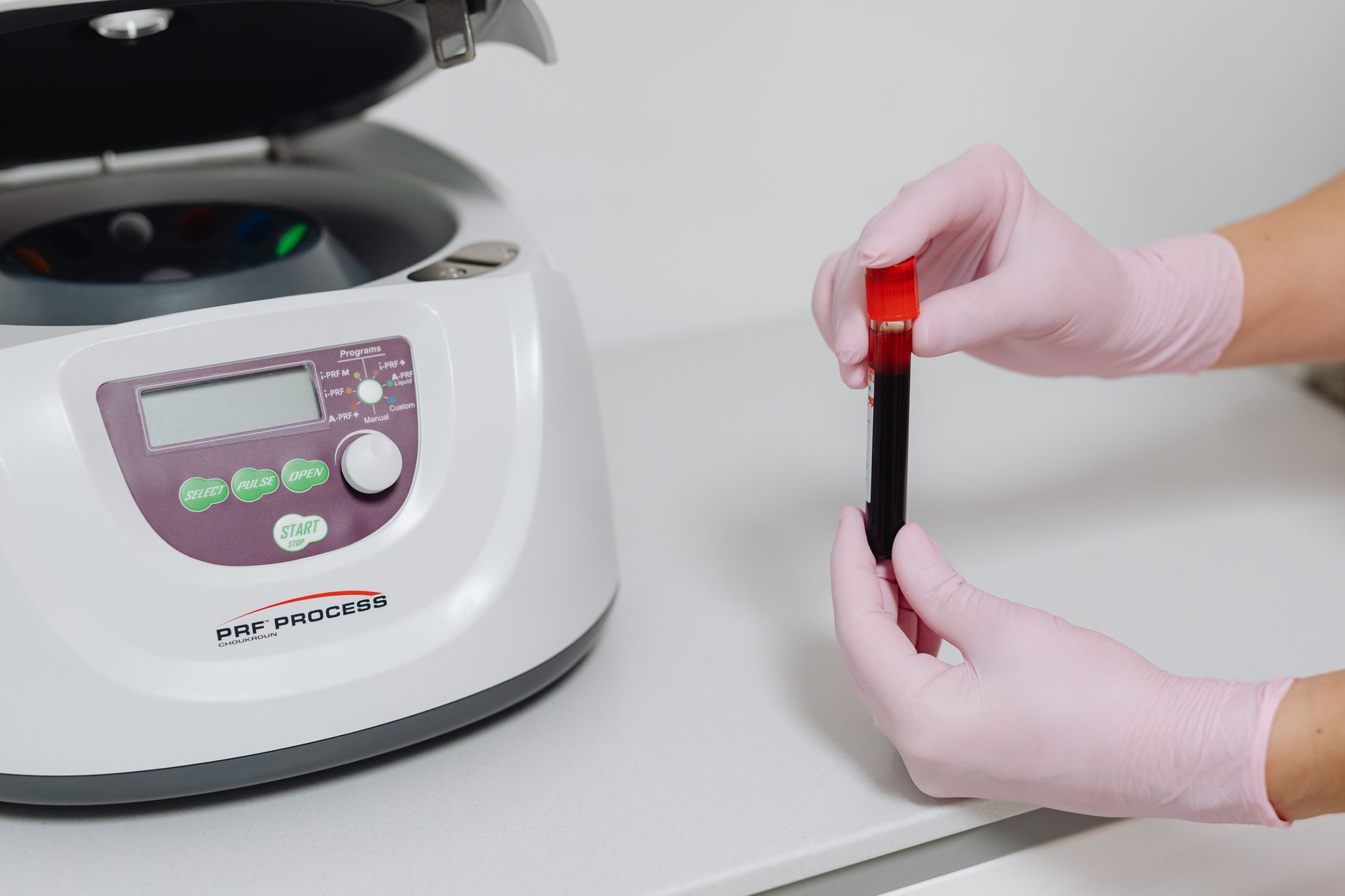
For faster initial tightening along the jawline, a plasma pen treatment works sooner than standard microneedling. It creates tiny points of surface tissue shrinkage, while needling relies on several cycles of skin repair to build firmness. That early contraction matters, but it is only one part of choosing a treatment for sagging jowls.
At Serenity Healing by Lobna, we consider your skin tone and how much visible healing time you can manage. We also look at sun damage and enlarged pores alongside loose skin. Here in Westlake Village, California, years of sun exposure often mean the skin needs repair as well as tightening.
What's Inside This Guide
- Sublimation Versus Collagen Induction: Mechanism Breakdown
- Matching the Modality to Your Skin Barrier and Pigment Risk
- Trade-Offs Between Rapid Retraction and Gentle Dermal Renewal
- Investment, Frequency, and Long-Term Maintenance Schedules
- Contraindications, Skin Tone Precautions, and Clinical Guidelines
- Five Practical Steps to Choose Your Jawline Protocol
- Common Client Questions on Lower Face Rejuvenation
- Personalized Jawline Consultations in Westlake Village
Sublimation Versus Collagen Induction: Mechanism Breakdown
The difference in speed comes from how each device affects the skin. A fibroblast plasma pen converts electrical energy into an arc, a small electrical discharge. At the surface, that arc vaporizes tiny dots of tissue without bleeding. This process, called sublimation, causes the surface skin to shrink right away.
Video: Cassandra Bankson reviews plasma pen fibroblast skin tightening and discusses DermaPen treatment, including before-and-after results.
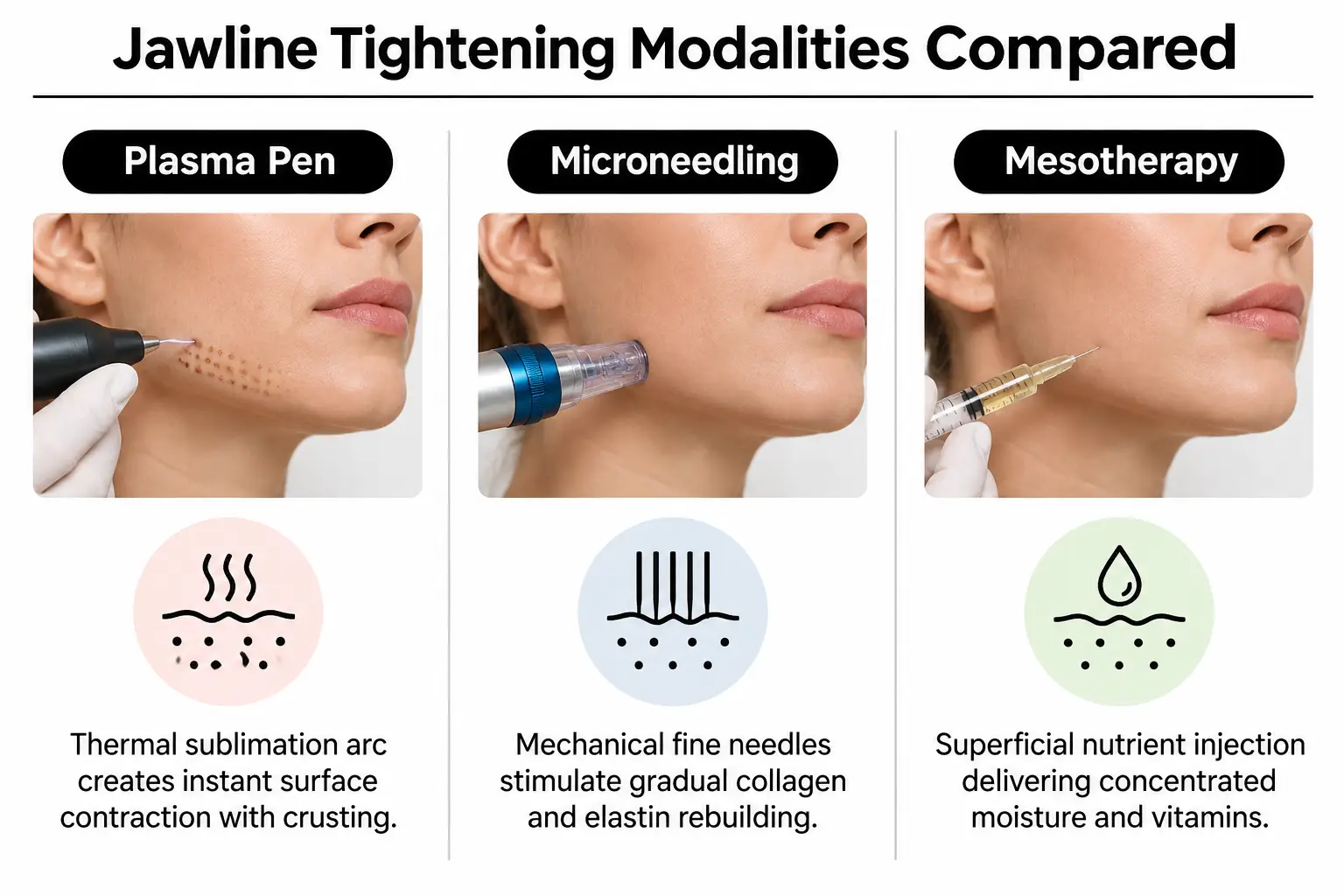
Nearby fibroblasts, the cells that make collagen, then spend several weeks repairing those controlled burns.
By contrast, microneedling makes thousands of tiny vertical punctures through the outer skin without heat. These trigger natural repair signals, a process described in dermatology guidance as collagen induction. Adding targeted nutrients, often called mesotherapy, helps address dullness and dehydration while improving uneven texture.
| Treatment Option | How It Works | Results Last | Upkeep Routine | Social Downtime |
|---|---|---|---|---|
| Fibroblast Plasma Pen | A heated plasma arc vaporizes tiny surface dots, causing loose skin to contract immediately. | Up to 2 to 3 years while natural aging continues. | One session, repeated after 18 to 24 months if needed. | 7 to 10 days with visible carbon crust dots. |
| Collagen Microneedling | Fine sterile needles make tiny channels that gradually stimulate collagen and elastin production. | 6 to 12 months with healthy lifestyle habits. | A series of 3 to 6 sessions, 4 weeks apart. | 24 to 48 hours of mild redness resembling sunburn. |
| Mesotherapy Infusion | Delivers nutrients such as vitamins, peptides, and hyaluronic acid into the shallow skin layers. | 3 to 6 months, depending on hydration. | A maintenance session every 2 to 3 months. | 12 to 24 hours of puffiness in treated areas. |
Because plasma draws surface tissue together during treatment, the initial lift becomes visible once swelling settles. Deeper skin repair still takes about eight to twelve weeks. Before booking a plasma pen session, make sure you can allow a week for noticeable scabbing, even though the first tightening happens sooner.
Matching the Modality to Your Skin Barrier and Pigment Risk
Loose skin is rarely the only concern along the jaw. Most clients asking about jowls also have stubborn dark patches, including melasma or lasting sun damage. In sunny places like Westlake Village, strong UV exposure can thin the skin's support layer and change how pigment is distributed.
Heat treatments carry a distinct risk of dark marks after inflammation, especially in deeper skin tones or skin prone to melasma. Heat can stimulate pigment-producing cells and make spots darker. For skin with these pigment concerns, tiny mechanical punctures paired with brightening serums offer a much safer approach to improving the lower face.
| Skin Type or Primary Concern | Recommended Approach | Clinical Rationale |
|---|---|---|
| Loose skin in Fitzpatrick types I-III (lighter skin tones), without pigment concerns | Fibroblast Plasma Pen | Direct heat contraction gives the strongest lift without a high risk of renewed dark patches. |
| Enlarged pores and rough surface texture | Microneedling + Mesotherapy | Evenly spaced punctures help reshape pore walls and smooth buildup in the outermost skin layer. |
| Melasma and lasting sun discoloration | Targeted Microneedling | Avoids heat damage while delivering pigment-suppressing ingredients to the base of the outer skin layer. |
| Thin, crepey neck skin with mild jowls | Combined Sequential Protocol | Needling first restores density and hydration. Plasma then targets stubborn loose folds in specific areas. |
Rough skin that has not improved with store-bought exfoliants can resurface more evenly with a mechanical treatment. Choosing microneedling or mesotherapy for a sagging jawline depends on what the skin needs. Some skin needs deeper hydration and nutrients; other skin needs the repair response that needles trigger.
Trade-Offs Between Rapid Retraction and Gentle Dermal Renewal
Faster tightening usually means accepting a more visible recovery period. We want you to understand that trade-off before treatment, rather than discovering it when you get home and see swelling or crusts in the mirror.
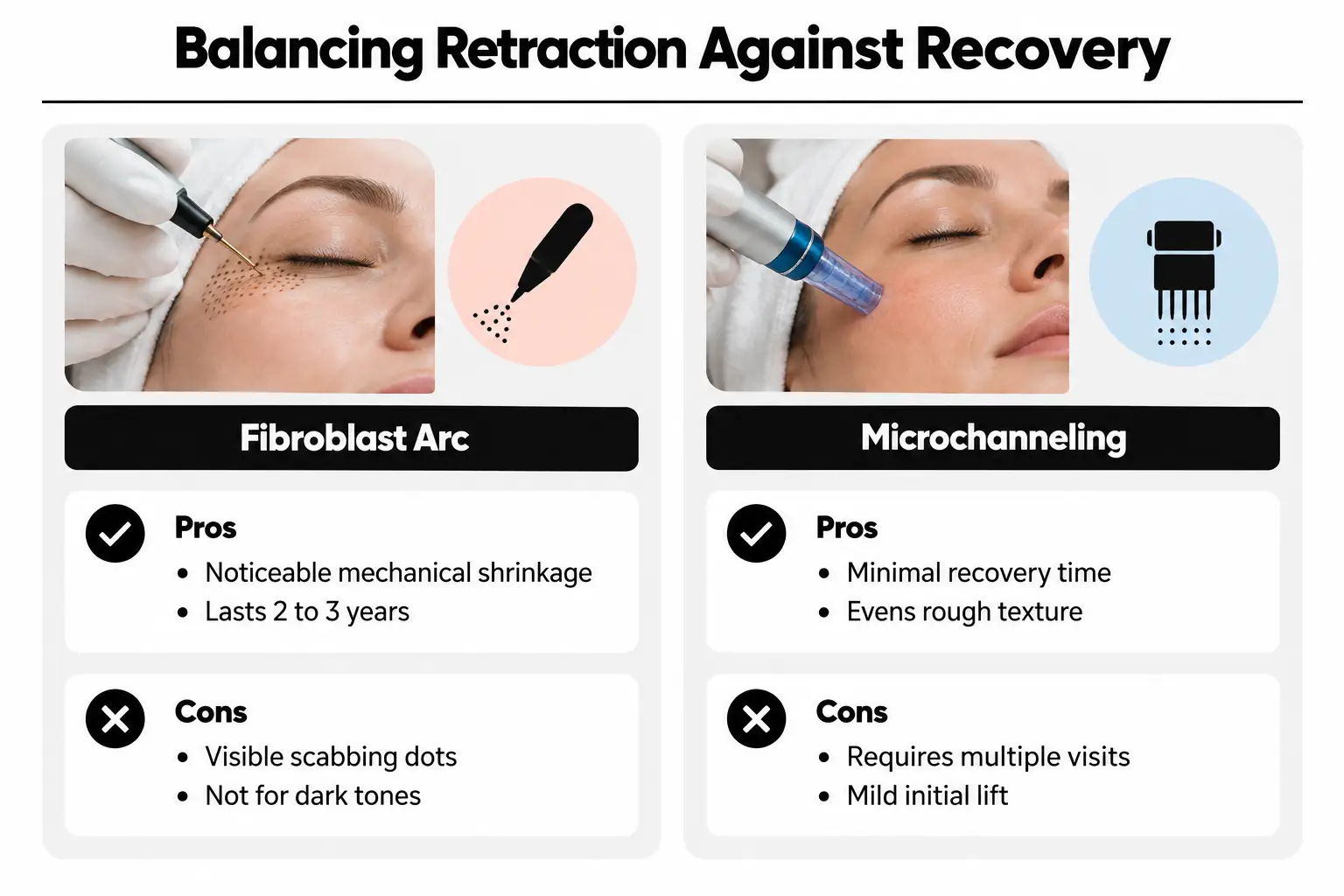
- Plasma pen benefits: Loose folds contract quickly, so fewer sessions are needed for a lift. In carefully selected clients, the changes to skin structure last well beyond the healing period.
- Plasma pen drawbacks: Visible carbon crusts can last ten days, with intense lower-face swelling for the first three mornings. Heat-related pigment risks make it unsuitable for darker or melasma-prone skin.
- Microneedling benefits: It is safe across skin tones and needs little time away from social plans. It also improves pores and allows healing serums to reach deeper skin layers.
- Microneedling drawbacks: Jawline lifting develops slowly and stays subtle rather than dramatic. Building noticeable skin strength takes multiple appointments spread over several months, rather than a single visit.
Plasma pen can be effective for full-face and neck tightening when looseness is mild to moderate. It has limits, though. Severe sagging with fully descended fat pads calls for a surgical consultation, rather than expecting a surface treatment to reposition deeper tissue.
Investment, Frequency, and Long-Term Maintenance Schedules
Budget for the full course of care, not just the first appointment. A more intense treatment costs more upfront but needs fewer visits. With a series of gentler treatments, you return regularly while collagen builds, so the calendar commitment matters as much as the per-session price.
Your microneedling treatment quote depends on the serum infusions and delivery technology used. Most practitioners recommend three to four sessions to start, followed by quarterly maintenance. Ask for a quote that covers the initial series and later visits, so you can compare the full cost rather than one appointment.
The cost of full-face plasma treatment depends on the size of the area and how complex it is to treat. Work limited to the lower face or under the chin usually falls into a middle price tier. Ask for a quote for your actual treatment area instead of relying on general neck-treatment price guides.
Since one plasma session often meets a client's goals for two years, the yearly cost of the two approaches can be quite similar.
Before requesting a quote for neck tightening, consider how the neck and jawline look together. Treating both areas often gives a more balanced result than treating the jaw alone while leaving the neck cords unchanged. The planned treatment zones should be clear before you compare prices.
Contraindications, Skin Tone Precautions, and Clinical Guidelines
Plasma treatment creates controlled tiny burns, so suitability matters as much as the hoped-for result. People prone to raised keloid scars or taking prescription blood thinners must avoid fibroblast arcs. Pregnancy and nursing also rule out this heat-based treatment.
Published skin resurfacing research stresses the need to respect how much pigment the skin contains. Fitzpatrick types IV through VI, the deeper tones on that skin classification scale, should avoid plasma devices because of high dark-mark risks. Mechanical microchanneling or gentle enzyme treatments are alternatives.
Similar healing precautions apply to body treatments and scar work. Services such as stretch mark and tag removal need the same attention to the skin's ability to recover, even when the treatment area is away from the face.
Strict aftercare rule: Leave plasma crusts alone rather than picking, scratching, or washing them off early. Letting them shed naturally over 7 to 10 days prevents scarring and new pigment marks.
Request a small patch test behind the ear or under the jaw for reactive skin, past eczema, or unexplained histamine-related flushing. Active acne or cold sores along the lower face mean treatment should wait until the skin has fully settled.
Five Practical Steps to Choose Your Jawline Protocol
Before booking, check both your skin history and your schedule. These five steps help you bring useful questions to your consultation and understand what each treatment will ask of you afterward:
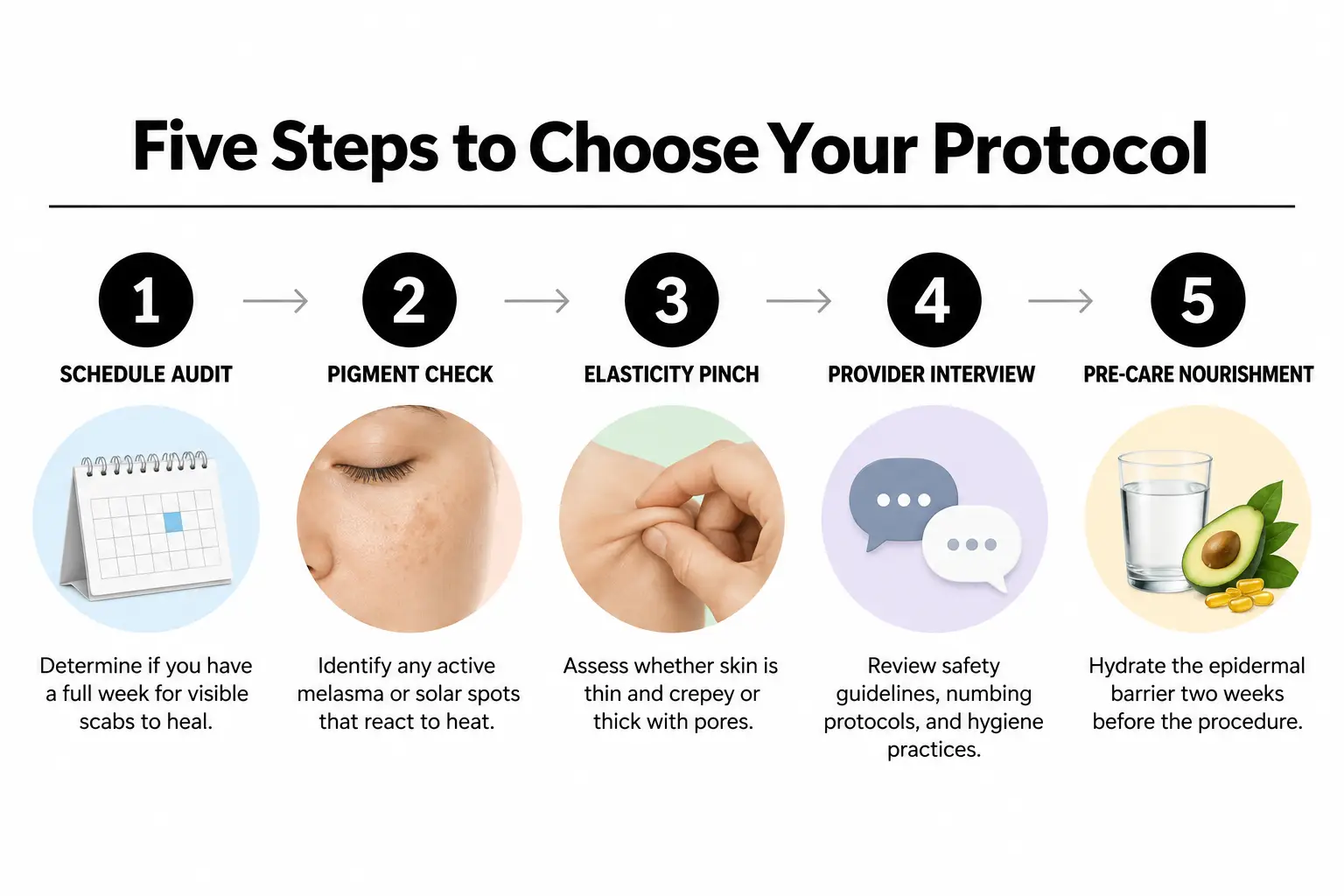
- Check your calendar: Decide if you can keep a full week free of public events while crusts heal. Otherwise, consider a procedure that allows mineral makeup within 36 hours.
- Review past pigment changes: Examine your skin in natural light for patchy sunspots or melasma, as well as marks left by acne. Those concerns favor needling with brightening infusions over heat.
- Pinch the jawline skin: Thin skin that feels loose like crepe paper responds to plasma's fast contraction. Thicker or oily skin with congestion and enlarged pores is better suited to mechanical repair.
- Ask about experience: Find out how many lower-face cases your practitioner handles each month. Ask them to explain their cleaning and sterilization practices, along with how they numb the treatment area.
- Discuss skin preparation: A nourishing facial or targeted mesotherapy hydration session two weeks beforehand strengthens the skin barrier. That preparation helps the skin recover faster after the procedure.
Clients considering repair in other areas may also read about hair regrowth microchanneling. It offers another way to understand how tiny mechanical channels trigger a repair response, including how that process works around hair follicles as well as in facial skin.
Common Client Questions on Lower Face Rejuvenation
Can I combine both treatments in the same session?
No. Never treat the same patch of skin with both methods on the same day. Heat and needle punctures trigger different healing responses, and layering them would overwhelm the skin barrier. Spacing them eight weeks apart allows the contraction from plasma to heal before needling improves surface texture.
How painful is a plasma pen session compared to needling?
Expect stinging and spreading heat from plasma, even after thirty minutes of topical lidocaine, a numbing cream. Needling feels more like vibrating, scratchy pressure over the jawbone, which most clients find easier to tolerate. Your specialist applies soothing gels afterward to reduce the heat.
When will I see the full tightening effect along my jaw?
Initial plasma shrinkage happens as the surface dots form, but collagen contraction peaks between eight and twelve weeks. During the first week after needling, mild inflammation gives an early plumping effect. Firmer skin takes longer: allow three full months of ongoing cell renewal for the gradual tightening to become clear.
Will either treatment replace a surgical lower facelift?
Neither procedure reproduces surgery's repositioning of the SMAS, the deeper muscle and connective-tissue layer of the face. Both help with mild to moderate loose skin and surface texture. Severe overhanging skin or heavily displaced fat requires surgery rather than either of these skin treatments.
Personalized Jawline Consultations in Westlake Village
Genetics and facial movement shape your skin, along with years of sun exposure. At our Westlake Village practice, we plan care around those differences rather than use the same treatment for everyone. We offer personal attention in a calm setting for a targeted session or a longer course of restorative care.
To discuss a plan and quote for your jawline goals, contact Serenity Healing by Lobna and book your consultation.
Ready for your own treatment?
Book a calm, personalized appointment with Lobna in Westlake Village.
Make Appointment