

Procell microchanneling uses tiny stamped channels to encourage skin repair beneath atrophic acne scars, the pits left by lost tissue. At our Westlake Village studio, we use it to help soften uneven scar texture that topical skincare cannot reach.
The treatment creates clean, microscopic channels without tearing tissue, prompting the skin's natural repair process. Over several sessions, it helps soften indentations and improve skin tone and elasticity. Our post on Procell for hair regrowth covers another use of this treatment.
At our private studio in Westlake Village, California, we understand the frustration of deep pockmarks that remain despite expensive creams. Small, targeted injuries and specialized serums encourage your skin to rebuild its supporting tissue over time. Our earwax candle service is covered separately.
What's Inside This Guide
- How Microchanneling Rebuilds Pitted Dermal Texture
- Candidates for Scar Smoothing and When to Wait
- Your Treatment Walkthrough: What Happens in the Treatment Room
- Crucial Days: Essential Post-Session Protocol
- Timeline for Structural Improvement and Touch-Ups
- Normal Skin Reactions and Safety Precautions
- Questions Local Clients Ask About Scar Revision
- Plan Your Private Consultation in Westlake Village
How Microchanneling Rebuilds Pitted Dermal Texture
Atrophic acne scars form when severe inflammation damages the collagen that supports skin. They leave rolling dips, boxcar edges or narrow ice pick pits. Ordinary exfoliants cannot reach this damaged deeper layer through the thickened outer skin barrier. That is why we discuss treatments that physically stimulate collagen when clients ask how to treat these scars.
Video: How Procell microchanneling therapy improves skin tone and texture. (Reality Skincare Centre)
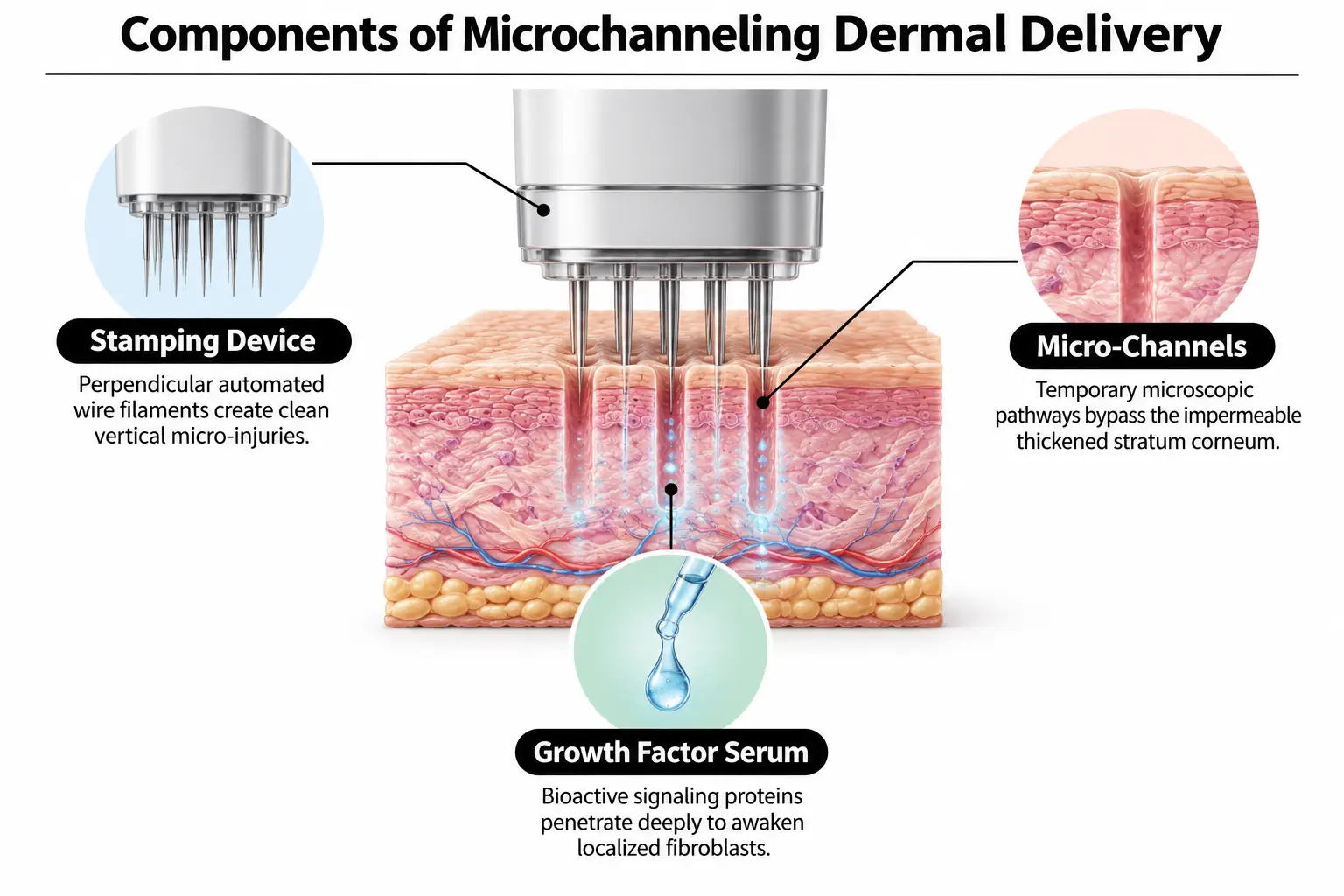
Procell uses a motorized wand with fine wire filaments that move straight up and down. Rolling devices enter at an angle and can drag across delicate tissue. The stamping motion instead makes clean channels of a consistent shape.
A clinical review of microneedling explains how controlled micro-injuries stimulate growth factors and new collagen production. This process works without heat damage or unnecessary scarring.
During a Procell microchanneling session, those temporary channels also help products penetrate the skin. Into them, we apply a growth factor serum derived from human bone marrow stem cell cultures. Its signaling proteins stimulate fibroblasts, the cells that build connective tissue, to produce fresh type I and type III collagen beneath each scar.
Candidates for Scar Smoothing and When to Wait
Persistent pits and enlarged pores often need more than a conventional facial. Microchanneling also helps with dark patches or dullness caused by sun damage and slow skin renewal. Its stamping action produces no heat, making it safe across all Fitzpatrick skin types, a classification based on sun response. The risk of darkening after inflammation is lower than with ablative lasers.
Some conditions mean we need to postpone treatment:
- Active acne breakouts: Stamping over pustules or inflamed cysts can spread bacteria across your face.
- Recent oral medication: Anyone who has taken oral isotretinoin must wait at least six months for skin tissue to recover.
- Active infections or rashes: Treatment must wait if the area has open wounds, cold sores, eczema or a psoriasis flare.
- Pregnancy and nursing: Hormonal changes affect healing and inflammation, so we advise waiting.
- Recent procedures: Allow at least two weeks after wrinkle-relaxing injections or dermal fillers, and four weeks after deep chemical peels.
A history of raised scars, including hypertrophic scars or keloids, means you should consult your dermatologist first. Clients considering other ways to smooth their skin can also explore our mesotherapy microneedling options. These focus on surface renewal with nourishment chosen for your skin.
Your Treatment Walkthrough: What Happens in the Treatment Room
Knowing the steps before you arrive can make the appointment feel less daunting. This is how we work through your visit:
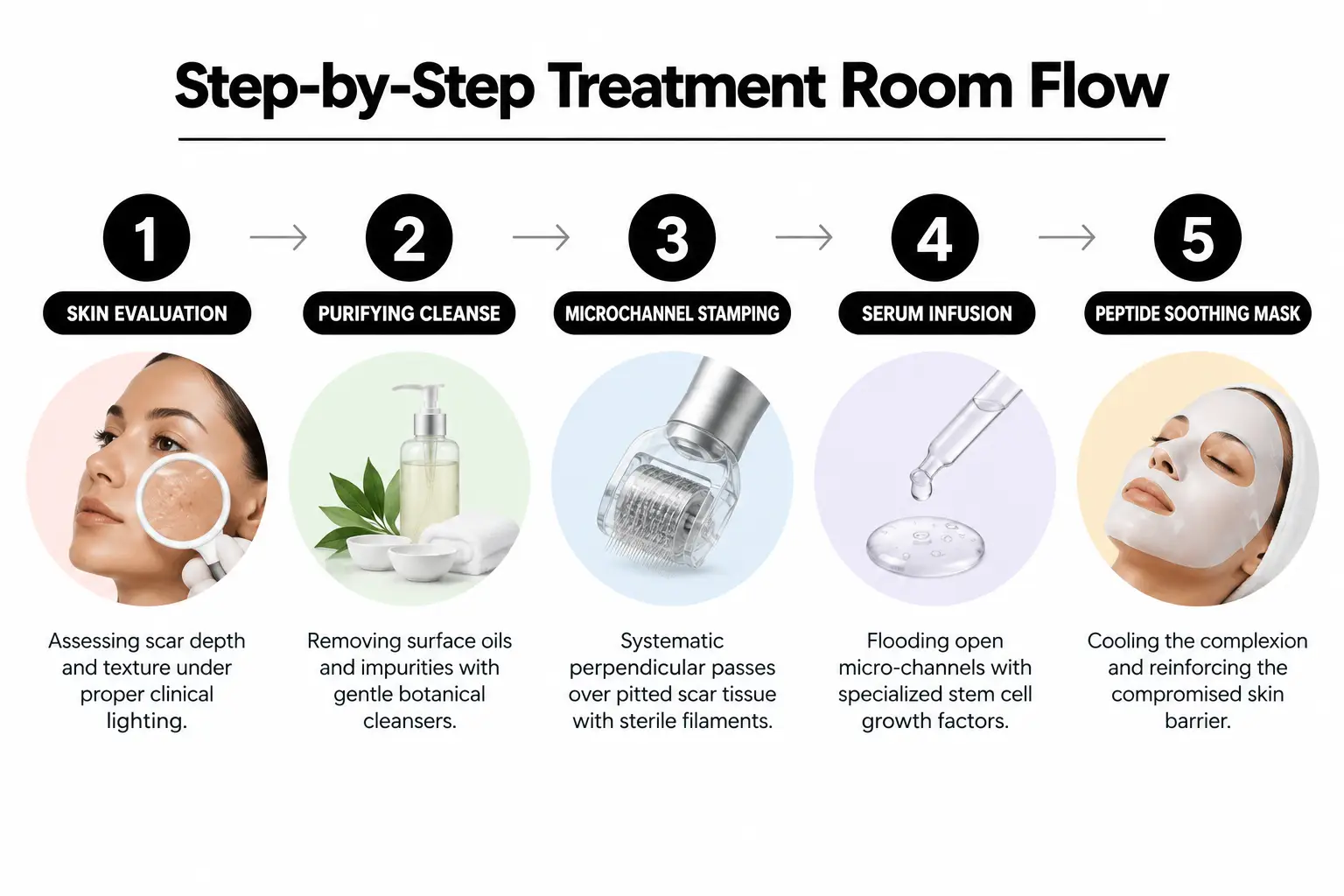
- Skin assessment: Under clinical lighting, we check for rolling, boxcar or ice pick scars. Very sensitive skin may need a patch test before treatment.
- Double cleanse: A pH-balanced botanical wash removes skin oils, sunscreen and surface dirt. Next comes a light antiseptic wipe to prepare the treatment area.
- Comfort preparation: Many clients describe a light vibration or a mild sandpaper feeling. On request, we can apply a gentle numbing cream for twenty minutes.
- Targeted stamping: Your practitioner moves the Procell wand across each facial area in planned passes. Areas with deep pitted scars get careful attention.
- Growth factor serum: Into the freshly stamped channels, we apply specialized growth factor serums that prompt the skin's repair signals.
- Calming finish: A cooling mask containing peptides, short chains of amino acids, rests on your skin to soothe heat. Protective barrier care follows before you leave our Westlake Village studio.
Deep pitted scars take more than an initial visit to smooth. Skin tissue rebuilds over several weeks, although you will notice some plumpness right after treatment. That early change shows a response to treatment, rather than the finished result.
Crucial Days: Essential Post-Session Protocol
Aftercare has a large effect on your result. The skin's protective barrier stays open for about ninety minutes to several hours after your session. During that time, the products you apply and the activities you avoid matter.
| Timeframe | What to Do | What to Avoid |
|---|---|---|
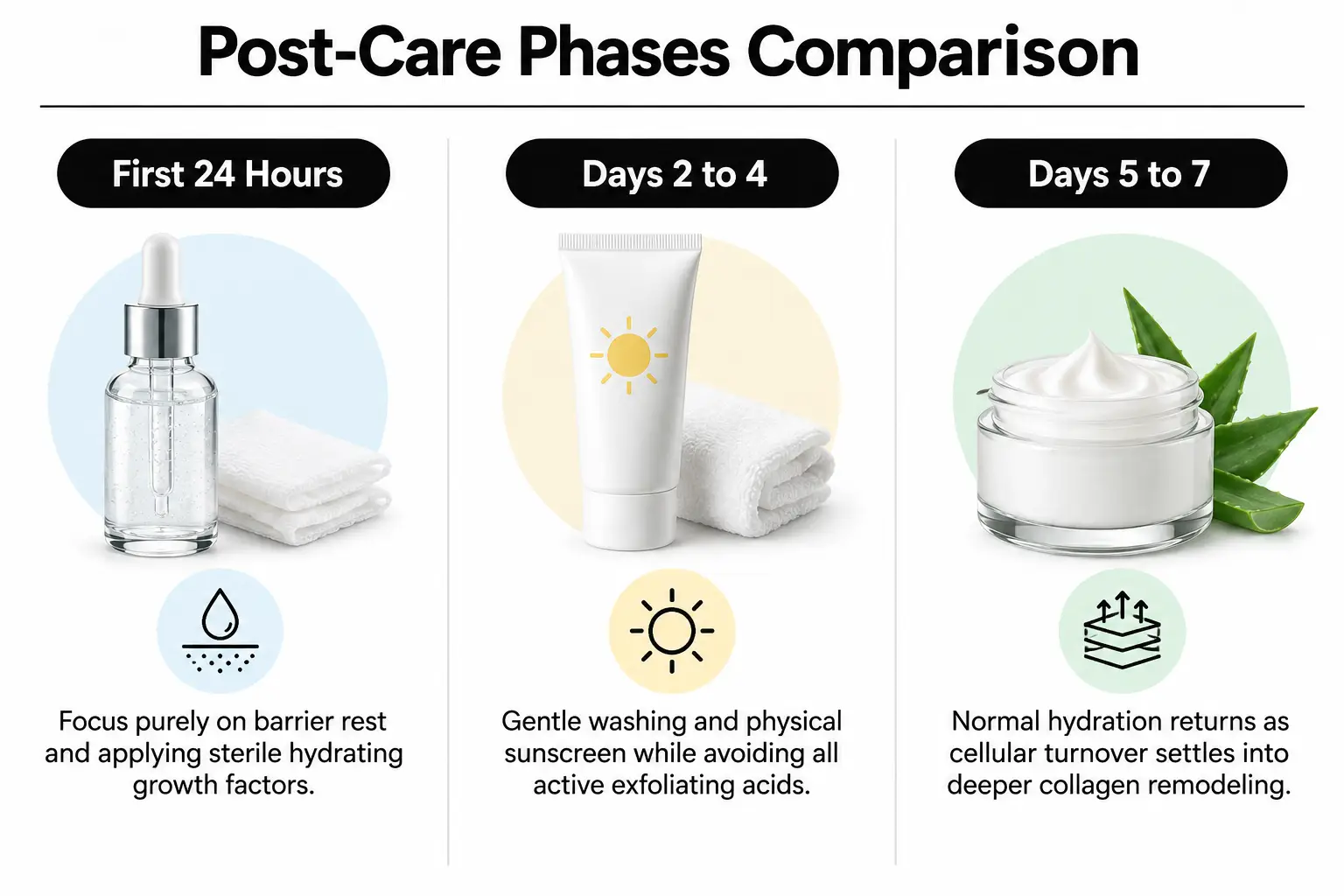
| First 24 Hours | Apply only the sterile hydrating growth factor serum provided. Rinse with clean, lukewarm water only if needed. | Keep your hands off your face. Skip makeup, heavy creams, sweating, hot yoga, saunas and direct sun. |
| Days 2 to 4 | Use a gentle, non-foaming cleanser, hyaluronic acid, a soothing barrier balm and broad-spectrum mineral sunscreen. | Skip exfoliating acids (AHA/BHA), retinoids, vitamin C serums, facial scrubs and swimming pools. |
| Days 5 to 7 | Return to your usual hydration routine. Keep protecting your skin each day with a zinc-based mineral sunscreen. | Avoid aggressive facial waxing, chemical exfoliation pads and intense direct UV tanning. |
These steps prevent moisture from escaping through the skin and protect vulnerable cells from environmental stress as hydration builds.
Timeline for Structural Improvement and Touch-Ups
Rebuilding scar tissue takes longer than temporary plumping because your skin has to make new supporting proteins. Most clients see a brighter glow within three to five days, as the initial tightness eases. Visible lifting of the scar depressions appears around four to six weeks after treatment.
Our scar removal treatments generally involve a series of appointments when the goal is to rebuild tissue. Mild dips show noticeable smoothing after three sessions, spaced four weeks apart. Deeper boxcar or rolling scars need four to six sessions for the best results.
Esthetician's Rule: Collagen builds over months, so scar texture continues to soften after your final scheduled session.
Once you reach the improvement you want, results last because your body has built new tissue. A seasonal maintenance visit helps support collagen as skin ages and faces environmental exposure. For concerns about body skin texture, you can also read about our stretch mark and tag removal sessions.
Normal Skin Reactions and Safety Precautions
Recovery is short compared with aggressive heat-based lasers or manual rolling treatments. Temporary reactions still happen as the skin heals, and it helps to know what to expect:
- Mild erythema (redness): Skin looks and feels mildly sunburned for about twelve to twenty-four hours.
- Tightness and mild dryness: Faster skin renewal can cause light flaking or tightness around days two and three.
- Slight swelling: Sensitive skin may develop a little puffiness around the cheekbones or jawline.
These reactions usually settle on their own within forty-eight hours. Unexpected blistering, lasting pain, oozing or signs of fever need immediate contact with your esthetician or healthcare provider. Before you leave the studio, we go through your aftercare instructions so you know how to care for your skin.
Questions Local Clients Ask About Scar Revision
What makes procell microchanneling vs microneedling for scars different?
Traditional microneedling often uses rolling devices that enter at an angle and may leave tiny tears or surface scratches. Procell's filaments stamp straight down, creating clean, uniform channels. This reduces avoidable damage at the surface, with less inflammation and a shorter recovery.
Is microchanneling the best procedure for stubborn rolling acne scars?
For mild to moderate rolling scars, microchanneling is a leading option that stimulates collagen beneath the dip without using heat. Deeper scars held down by tissue bands may need subcision, a procedure a doctor uses to release those bands. Microchanneling helps soften scar edges and rebuild tissue beneath shallower depressions.
How much does a session cost and how many do I need?
Ask us for a quote for your microchanneling facial, which includes specialized growth factor serums. Most clients treating atrophic scars get their best smoothing results from three to six sessions, spaced about four weeks apart. Your scar depth helps determine how many visits to plan.
Can microchanneling help with stubborn ice pick scars?
Ice pick scars are narrow columns that reach deep into the skin, making them the hardest type to erase without medical treatment. Microchanneling softens their steep edges and improves the surrounding texture. Deeper pits may need combined treatment from a physician, such as TCA CROSS, which applies concentrated acid inside individual scars to encourage repair.
Will my face peel heavily after the procedure?
Heavy, sheet-like peeling associated with deep chemical peels does not happen with this treatment. Instead, most clients notice mild dryness or tiny flakes between days two and four as skin renewal speeds up. Gentle cleansing and regular moisturizing help clear those flakes.
Plan Your Private Consultation in Westlake Village
Long-standing scars need careful assessment and care that respects your skin's healing cycle. At our studio, Serenity Healing by Lobna, we provide focused skin treatments in a quiet setting. The aim is to care for your complexion while giving you space to relax.
During your consultation, we assess your skin and discuss the changes you want, from softer acne pits to less sun-related dullness. Your treatment plan starts with that conversation. To book a private consultation in Westlake Village, get in touch with us.
Ready for your own treatment?
Book a calm, personalized appointment with Lobna in Westlake Village.
Make Appointment