

Fibroblast therapy uses a tiny electrical arc to heat loose skin, causing surface contraction and gradual tissue repair. It can tighten crepey neck skin, but severe laxity may still need surgery. At Serenity Healing by Lobna, we help clients understand that difference before considering plasma treatment.
Deep muscle separation and large amounts of loose skin often require a surgical neck lift. Plasma pen therapy can visibly tighten crepey skin under the chin, an area called the submental zone, and along the jawline. Below, we explain how the treatment works, who it suits, and what to expect while your skin heals.
What's Inside This Guide
- The Science Behind Submental Plasma Tightening
- Assessing Your Skin Tone and Laxity Profile
- Step-by-Step Experience During Your Treatment
- Managing the Healing Phase and Protecting the Carbon Crusts
- Realistic Expectations and Collagen Renewal Timelines
- Normal Surface Reactions Versus When to Call Your Esthetician
- Direct Answers to Common Client Questions
- Plan Your Personalized Skin Session in Westlake Village
The Science Behind Submental Plasma Tightening
A plasma handpiece charges the gas between its tip and your skin, creating a tiny electrical flash. That flash crosses the air gap and sublimates surface tissue, meaning it turns the solid tissue directly into gas. There is no surgical incision, but each treated spot leaves a small carbon crust, often called a plasma dot.
Video: Plasma fibroblast healing phases and aftercare (ROSASS: Plasma Fibroblast + Increase Salon Revenue)
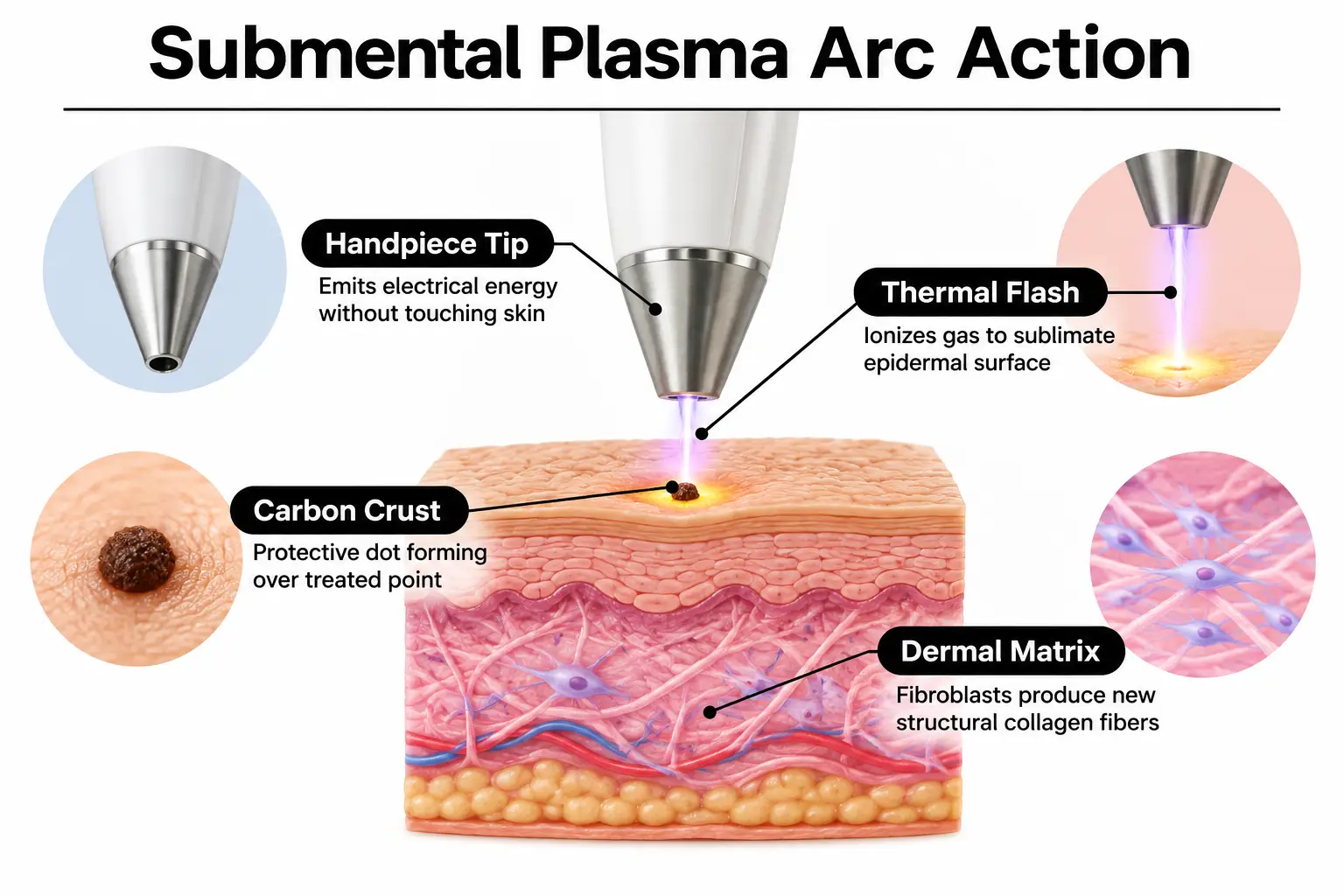
Beneath each crust, heat reaches the upper dermis, the skin's supporting layer. This small, controlled injury stimulates fibroblasts, the cells that make support proteins. Research available through the National Institutes of Health describes how controlled heat injury starts wound healing and encourages production of type I and type III collagen.
New collagen fibers form over eight to twelve weeks as the skin contracts. Our discussion of skin treatments replacing invasive surgery compares heat-based contraction with treatments that encourage collagen through other methods. For another approach to tissue stimulation, read about microchanneling for skin rejuvenation.
Assessing Your Skin Tone and Laxity Profile
Mild to moderate crepey folds and loose skin along the upper neck tend to respond best. Thinning skin that has lost its bounce through sun exposure or aging can show noticeable firming. Treatment targets the crepiness that moisturizers alone cannot correct, including loose skin directly beneath the chin.
Deep platysmal bands, the visible bands formed by neck muscles, are a different concern. Significant fat deposits beneath the chin also make skin tightening alone a poor fit. Plasma treatment acts on skin tissue, so it cannot lift separated muscles back into position or address every cause of a loose neck contour.
Heat injury can cause post-inflammatory hyperpigmentation, or dark patches after healing. We assess skin tone using the Fitzpatrick scale, with treatment typically limited to types I through III. Pregnancy, nursing, a tendency to form raised keloid scars, and current oral isotretinoin use rule out plasma tightening.
An active rash or viral infection on your neck means treatment needs to wait. Our beginner's guide to mesotherapy for dull skin explains another approach to skin rejuvenation.
Step-by-Step Experience During Your Treatment
Before your appointment, it helps to understand the time spent preparing your skin as well as treating it. At a clinic offering Procell therapy and plasma pen services, careful cleansing and precise treatment placement matter throughout the session.
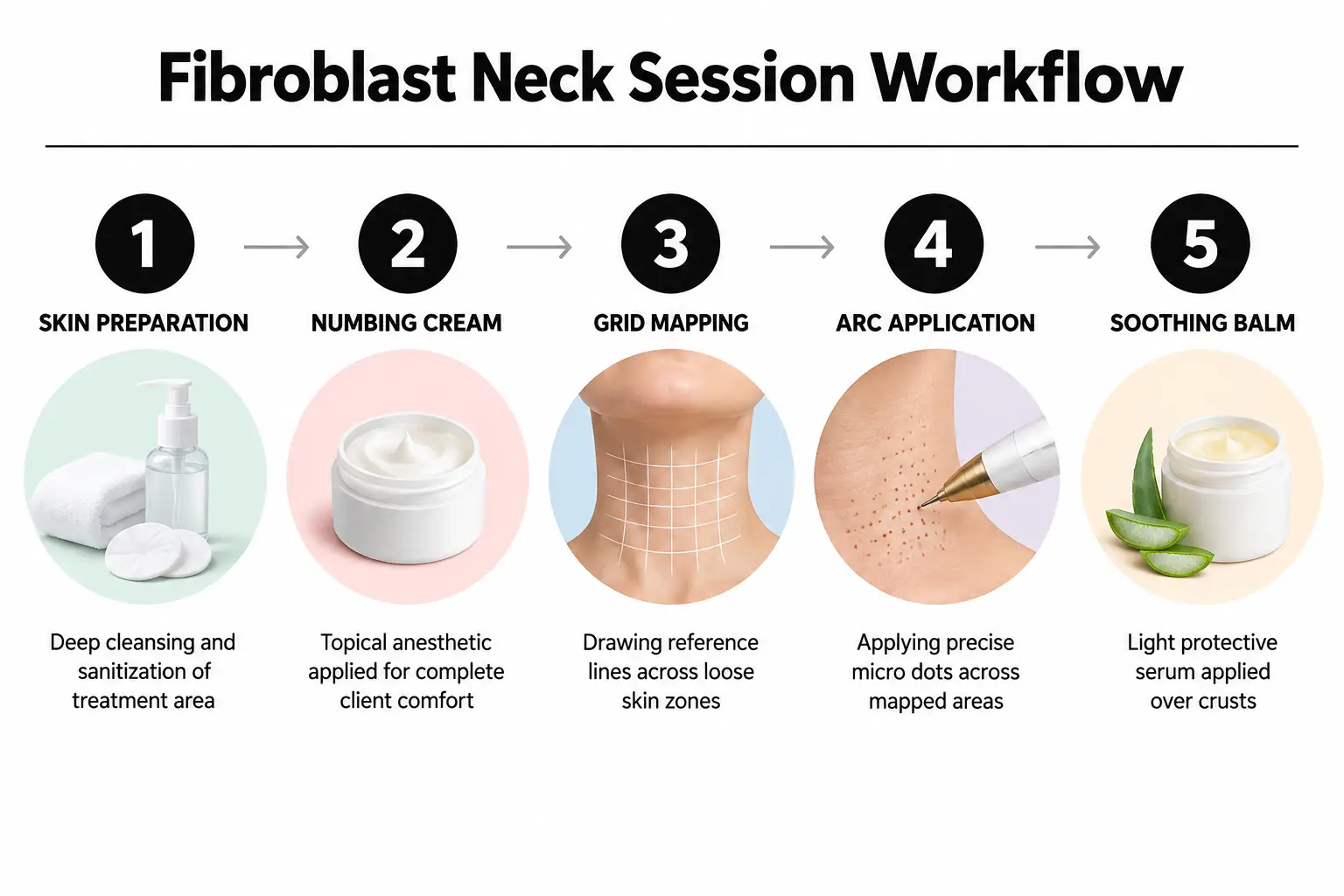
- Skin assessment and cleansing: Your practitioner checks the area for conditions that could make treatment unsuitable, then removes oils, perfume, and other surface residue.
- Topical numbing: A strong lidocaine cream goes over the lower chin and neck. It stays in place for 30 to 45 minutes to numb the area before treatment.
- Mapping the grid: Your provider draws a reference pattern on the skin. This guides dot placement so the tightening is spread evenly across loose folds.
- Precise application: The esthetician holds the device millimeters above the skin and applies the arc one dot at a time. Treating the marked area takes about 45 to 60 minutes.
- Protective balm: The area is gently patted and covered with a light healing serum. It protects the fresh crusts without sealing in heat.
Some clients also ask about treating nearby areas. Read about fibroblast treatment for hooded eyelids to compare the approach used on the upper face. Please tell us about any medical conditions before booking so we can discuss whether treatment is suitable.
Managing the Healing Phase and Protecting the Carbon Crusts
Aftercare has a direct effect on how your neck heals. Following the instructions and protecting the small crusts helps the skin repair evenly and reduces the risk of scars or uneven pigment.
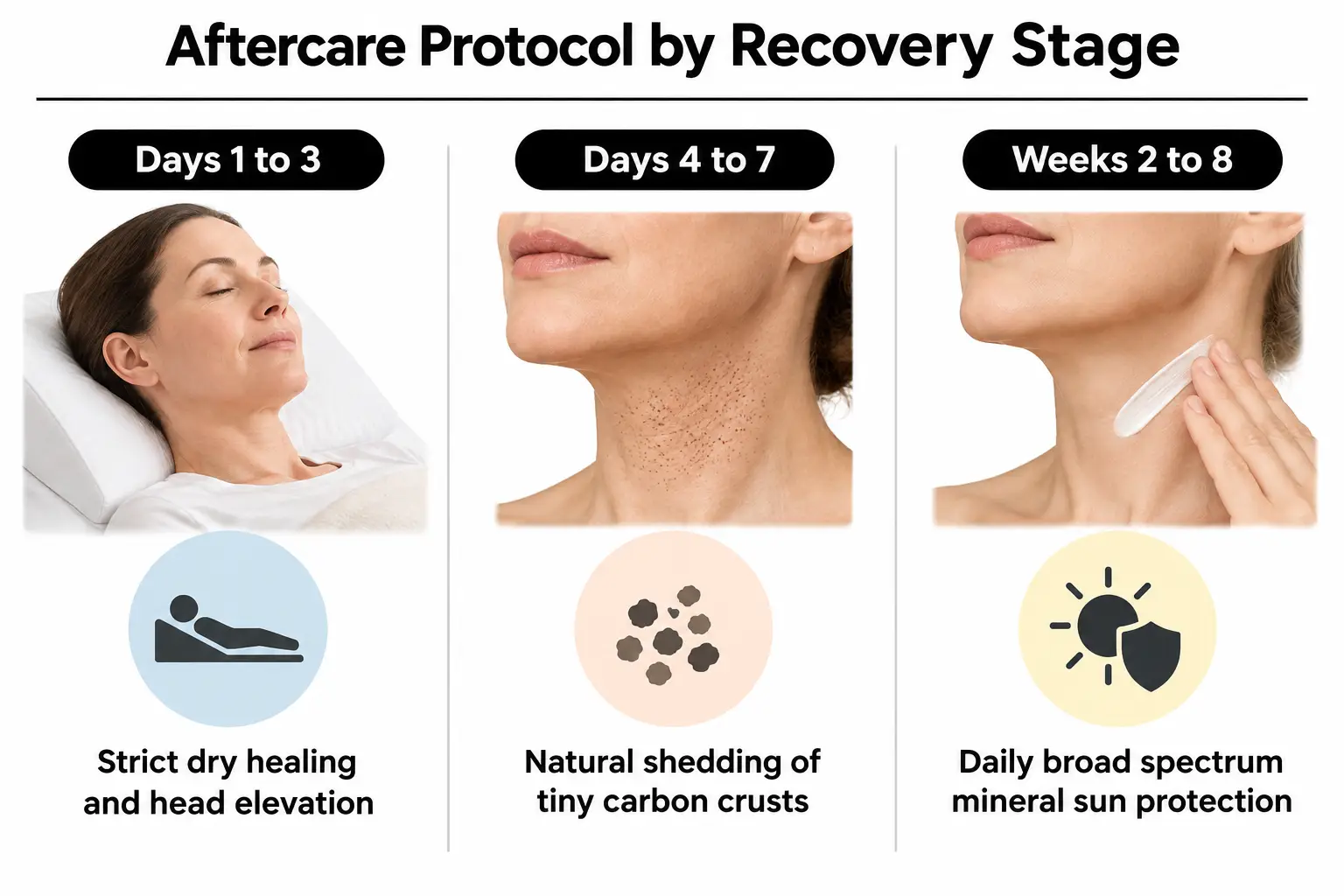
| Healing Phase | What to Do | What to Avoid |
|---|---|---|
| Days 1 to 3 | Keep your neck dry and rest with your head raised. Gently dab with clean water if needed. | Avoid hot showers, heavy sweating, ice packs, and all makeup or active skincare. |
| Days 4 to 7 | Let the brown dots flake off on their own. Use only approved soothing balms. | Do not pick, scratch, or scrub the crusts. Avoid tight, stiff collars. |
| Weeks 2 to 8 | Use mineral zinc oxide sunscreen daily, along with gentle, hydrating barrier serums. | Avoid direct sun, tanning beds, chemical exfoliants, and retinol products. |
Healing time differs between procedures because they affect skin in different ways. Our explanation of Procell microchanneling for indented acne scars looks at another form of skin repair. Its shallow pinpricks heal faster than the deeper heat-treated spots left by plasma sublimation.
Realistic Expectations and Collagen Renewal Timelines
Some tightening appears as soon as the plasma arc treats the skin. That first change comes from tissue losing moisture and shrinking, rather than new collagen. Lasting structural change takes longer, while collagen forms and matures beneath the surface.
Most clients notice smoother texture around week three, after swelling settles. Tightening peaks between weeks eight and twelve. A single session can last two to three years, though aging and sun exposure continue. Our guide to nonsurgical facelift options for women over 50 in LA offers more background on longer-term skin care.
Our aftercare rule: Do not force crusts off with scrubs or heavy creams that seal the skin. Letting them fall away naturally helps protect against dark patches.
For broader contour and texture concerns, clients often consider other services alongside plasma treatment. Plasma dots shrink loose surface folds. Treatments such as microchanneling with Procell focus on pore texture and brighter-looking skin without leaving heat-related crusts.
Normal Surface Reactions Versus When to Call Your Esthetician
Redness and warmth are common in the first few hours after a focused energy treatment on the neck. Noticeable swelling is also expected and often peaks around day two.
Treated skin may feel tight and tender, much like sunburn. Itching around the dots is common as they become scabs. These reactions are part of the body's response to the controlled heat injury and usually settle within five to seven days.
Increasing pain after day three needs attention, especially with spreading yellow crusts, foul-smelling drainage, or a fever. Contact your practitioner or seek medical advice if these signs of infection appear. Blotchy dark patches that remain weeks after healing can indicate post-inflammatory pigmentation and should also be checked by a professional.
Our guide to tightening crepey neck skin without surgery in Los Angeles explains how we approach treatment safety when comparing different methods.
Direct Answers to Common Client Questions
Can plasma pen completely eliminate a severe turkey neck?
Plasma pen therapy can noticeably firm crepey skin, but it cannot remove large amounts of excess tissue or repair separated neck muscles. Severe cases with deep muscle bands usually need surgery for full correction. Plasma treatment can still soften the crepiness around those bands.
How painful is a plasma fibroblast neck treatment?
Numbing cream is applied 30 to 45 minutes before treatment. With that preparation, most clients describe small heat prickles rather than sharp pain. Warmth and sensitivity can remain around the neck for a few hours after the session.
How long do the brown carbon dots remain visible on the neck?
Brown crusts usually remain for five to seven days, then shed on their own. Neck skin has fewer oil glands than facial skin, so some crusts take up to ten days to come away completely.
How much does a full neck fibroblast session cost?
Ask our team for a quote for plasma pen treatment across the full face and neck. The price reflects the time needed to map and treat these delicate areas, along with the skill required for precise application.
Can I combine plasma pen with microneedling or microchanneling?
Never treat the same patch of skin with both methods at one appointment. Many clients space treatments several months apart instead. They use plasma pen for specific loose areas and choose facial microchanneling or Procell for hair regrowth to address other concerns.
Plan Your Personalized Skin Session in Westlake Village
We start by checking how much elasticity your neck skin has and discussing what you want to change. At our Westlake Village practice, care is one-on-one in a quiet, private setting where you have time to talk through your concerns.
Your concern might be horizontal neck creases or skin that no longer feels firm. We examine the tissue before recommending an approach, including alternatives for sagging skin, so the choice reflects what is safest for your skin.
To discuss plasma tightening or Procell therapy in Westlake Village, California, book a consultation with us.
Ready for your own treatment?
Book a calm, personalized appointment with Lobna in Westlake Village.
Make Appointment