
After a Plasma Pen (Full Face & Neck) session, gentle care and protection help support collagen production over the coming months. Fibroblast therapy creates tiny injuries in the upper dermis, the layer beneath your skin’s surface, to stimulate new collagen. This process targets loose jowls and crow’s feet, along with deep neck lines, without open surgery.
Keep healing skin calm and hydrated, and protect it from environmental stress while its collagen fibers reorganize.
One of the biggest aftercare mistakes is using harsh exfoliants or picking carbon crusts before they shed naturally. Removing crusts early interrupts skin cell movement and raises the risk of dark marks after inflammation. Gentle care that does not strip your skin supports healing and helps preserve its elasticity.
What's Inside This Guide
- Why Targeted Aftercare Dictates Dermal Renewal
- Daily Steps for Protecting Fresh Fibroblasts
- Ingredients That Support Tissue Recovery
- Habits That Interfere with Skin Tightening
- Maintaining Elasticity Between Salon Visits
- Identifying Normal Healing Versus Skin Distress
- Common Client Questions on Healing Times and Care
- Plan Your Skin Journey in Westlake Village
Why Targeted Aftercare Dictates Dermal Renewal
The electrical arc that creates tiny carbon crusts also activates fibroblasts, the cells that make collagen. They produce Type I and Type III collagen, which help firm loose jowls and smooth lines around the eyes. As published research explains, tissue rebuilding happens gradually over several months through a series of cellular processes.
Disturbing the outer skin layer during early healing can cause the collagen beneath it to form unevenly. Leaving protective crusts alone helps shield developing tissue from bacteria and moisture loss through the skin. That recovery period gives lines around the mouth and loose neck tissue time to tighten as the skin rebuilds.
Knowing what fibroblasts do makes the waiting period easier to understand. Before booking, read our guide to downtime and carbon crusts so you can make realistic plans for the days after treatment. Visible healing and the deeper work of collagen repair do not finish at the same time.
Daily Steps for Protecting Fresh Fibroblasts
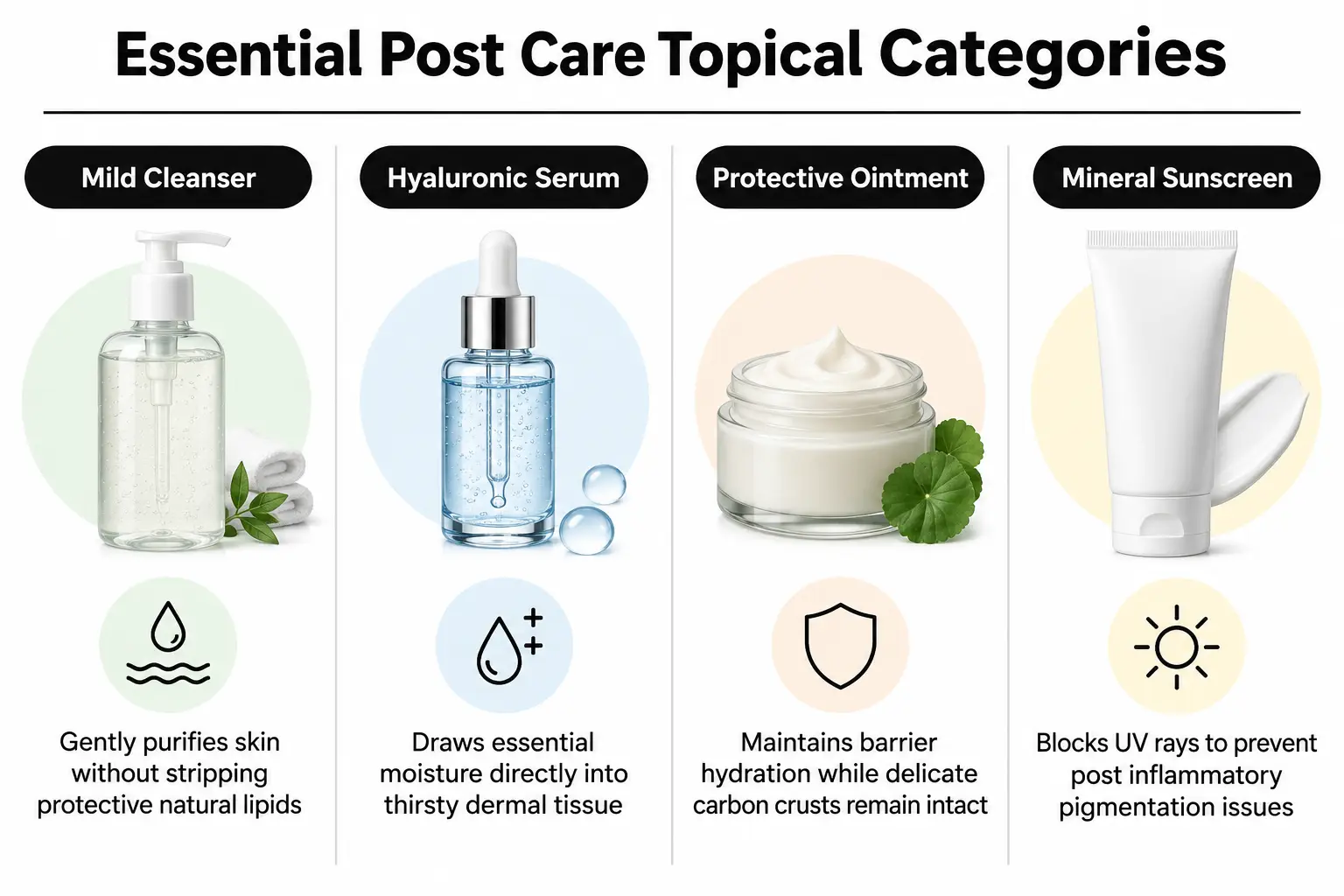
A simple daily routine helps keep irritation down while the deeper layers of your skin rebuild. During recovery, focus on gentle cleansing and protecting the treated area rather than adding more products:
Video: Ocura Plasma Pen tutorial (OcuraLife)
- Gentle morning cleanse: Use lukewarm distilled water or a very mild, fragrance-free foaming gel. Pat the surface dry with a clean paper towel instead of rubbing it with a cloth.
- Soothing hydration layer: Lightly press a pure hyaluronic acid serum onto clean skin. This ingredient helps hold moisture without the need to rub or disturb the small surface scabs.
- Barrier protection: Apply a thin layer of sterile healing balm to help hold moisture in the skin and protect the treated area from dry air.
- Mineral sun defense: After the scabs have fully separated, apply a broad-spectrum, non-nano zinc oxide sunscreen with at least SPF 30 before going into daylight.
- Evening recovery rinse: Gently wash away particles that have settled on your skin during the day. Reapply your hydrating product and protective ointment, then sleep with your head elevated on a silk pillowcase.
Consistent, gentle care helps your skin stay calm through recovery. For concerns around the eyes, you may also be weighing treatment against surgery. Our comparison of plasma treatment and surgical blepharoplasty explains how the approaches differ for this sensitive area.
Ingredients That Support Tissue Recovery
Gentle formulas give newly stimulated fibroblasts time to build collagen without irritation from strong ingredients. Leave resurfacing acids out of your routine until your practitioner approves them. Synthetic perfumes and drying alcohols should stay off healing skin too.
| Product type | What it does | Look for | Avoid |
|---|---|---|---|
| Mild cleanser | Removes impurities without stripping skin oils | Glycerin, neutral pH, soothing colloidal oat | Salicylic acid, glycolic acid, synthetic fragrances |
| Hydrating serum | Draws water into deeper skin layers | Pure low-weight sodium hyaluronate | Essential oils, citrus extracts, drying alcohol |
| Protective balm | Holds in moisture and reduces friction on crusts | Panthenol, madecassoside, medical petrolatum | Heavy botanical oils, lanolin, thick artificial waxes |
| Daily sunscreen | Protects fragile skin from UV-related darkening | Zinc oxide, titanium dioxide, physical blockers | Chemical UV filters, avobenzone, oxybenzone |
For a more defined jawline, some clients compare plasma treatment with microneedling. Our comparison of the two treatments for jowls explains their different effects on tissue. Microneedling makes small punctures, while plasma uses heat to turn tiny amounts of surface tissue into vapor.
Habits That Interfere with Skin Tightening
Ordinary habits can slow recovery, even when you are careful with your products. Pay attention to how you touch your skin and how much heat or sweat it encounters:
- Picking crusts early: Pulling carbon spots off before the outer skin layer has matured can leave lasting redness and shallow dents in the surface.
- Applying active serums too soon: Retinoids, vitamin C, or chemical peels used too early can cause severe inflammation. That irritation slows tissue repair rather than helping it.
- Engaging in strenuous workouts: Heavy sweating during the first five days can bring bacteria onto raw tissue and cause swelling around treated areas.
- Soaking in hot baths or saunas: Too much heat widens blood vessels. This can increase swelling in fragile under-eye skin and delay healing.
Practitioner rule: Keep liquid foundation and concealer off healing carbon crusts until the spots fall away naturally and the pink skin beneath has fully closed.
Mature facial contours may need a broader discussion of treatment choices before you decide. Read about non-surgical facelift options for women over 50 in LA to compare approaches to facial rejuvenation without surgery.
Maintaining Elasticity Between Salon Visits
After the carbon crusts shed, new collagen fibers continue to mature for six to twelve weeks. Daily nourishment and protection from UV exposure still matter during this period. The surface may look healed while changes are continuing underneath.
Drinking enough water and eating foods rich in amino acids gives collagen-producing cells the building blocks they need for repair. For planning beyond the first appointment, our guide to full-face treatment costs compares the initial treatment with ongoing maintenance sessions.
Avoiding a constant head-down posture also helps protect the neck and jawline from horizontal lines returning early. Questions about an existing skin condition deserve a closer look before you change your routine. You can contact us directly to discuss your home care choices.
Identifying Normal Healing Versus Skin Distress
Some swelling and tenderness are expected during the first forty-eight hours, and the skin may feel tight. According to guidance on minor burns, mild heat injuries can cause pinkness and a small buildup of fluid during normal tissue repair.
Spreading redness, unusual warmth, severe throbbing pain, or honey-colored discharge calls for a licensed practitioner or healthcare professional. These may signal infection rather than normal tightening. People who are pregnant, nursing, experiencing active eczema, or taking blood thinners should postpone plasma treatment until their physician clears them.
Clients with heavily sun-damaged or crepey neck skin often consider added support for healing tissue during plasma recovery. Our article on growth factors for non-surgical neck treatments explains the role of peptide serums. Peptides are short chains of amino acids used in skin care to support tissue repair.
Common Client Questions on Healing Times and Care
How long does it take for carbon crusts to fall off after treatment?
Most carbon crusts fall away on their own between five and seven days after treatment. Thicker skin or areas that move more may hold onto scabs a little longer. Let them shed without picking, even if the surrounding skin has already cleared.
Can I wear makeup while my face is recovering from plasma treatment?
Wait until every crust has separated and the pink skin underneath has closed before wearing makeup. Powder or foundation applied too early can trap bacteria and disturb newly forming collagen fibers. A crust that is nearly ready to fall off still needs to be left alone.
When will I see the full skin tightening results?
Early tightening becomes visible once the crusts shed, but deeper collagen rebuilding continues for eight to twelve weeks. Firmer skin and wrinkle reduction develop as those structural proteins mature. The first visible change is not the full result.
Is sun protection necessary after my skin finishes peeling?
Daily mineral sunscreen is needed for at least three months after plasma tightening to help prevent dark marks caused by inflammation. Developing tissue stays highly sensitive to UV rays, even when the redness has completely faded.
Plan Your Skin Journey in Westlake Village
At Serenity Healing by Lobna in Westlake Village, California, we pair treatment with guidance through each stage of aftercare. Firmer skin and improved texture depend on both skilled application and the care that follows. Our private studio provides a calm setting where we focus on your comfort and skin goals.
Our plasma pen treatment addresses loose skin across the full face and neck. For a quote and a discussion of your treatment goals, book a consultation with us at our Westlake Village studio.
Ready for your own treatment?
Book a calm, personalized appointment with Lobna in Westlake Village.
Make Appointment